Work Days at Waimea Middle School:
Community members, students, teachers, staff and families are
invited to our work days, from 9AM
to noon. A pot luck lunch will
follow and chilled lemongrass tea will be provided made from herbs grown by
students in the garden. If the weather is inclement, please call ahead to
confirm that the work day is being held.
Info: Garden Leader Amanda Rieux (640-3637).
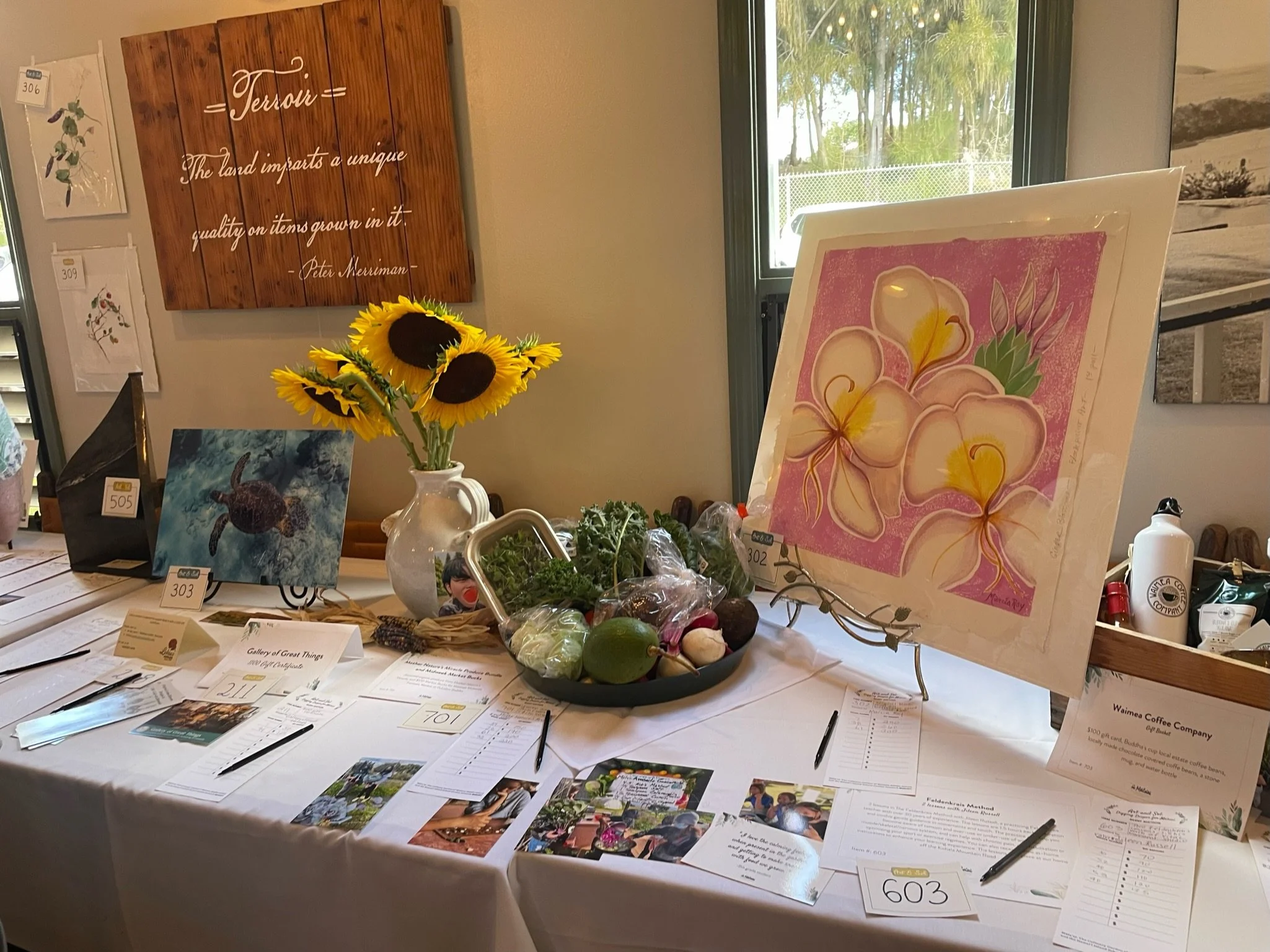
Recent events: Art & Sol, Shakespeare Garden, Composting’ Workshop, Keiki Fest, Farmer’s Market Iron Chef... see the Event History page!
See Compost Donation and Iron Chef in our March 31 2008 Newsletter.
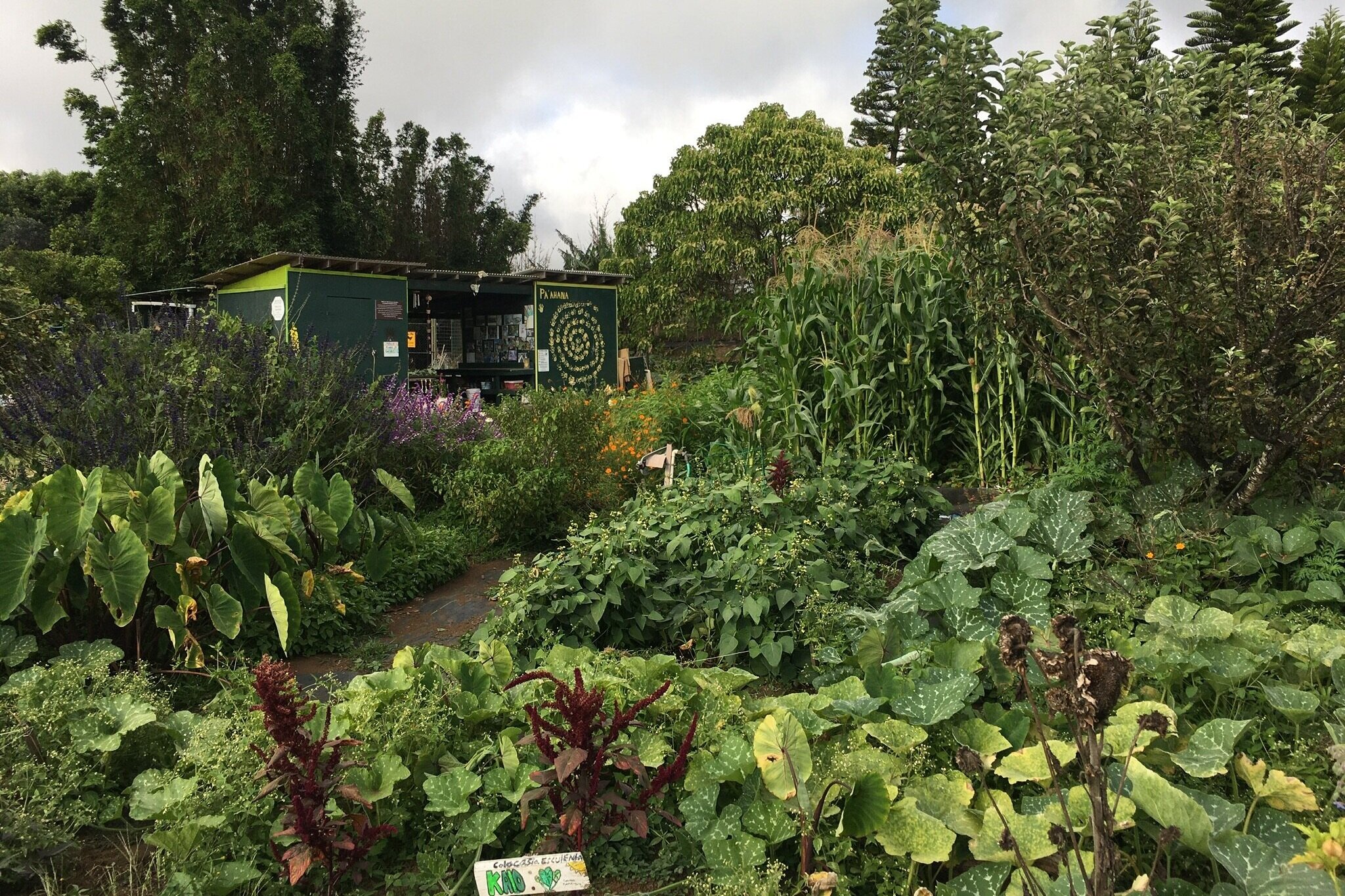
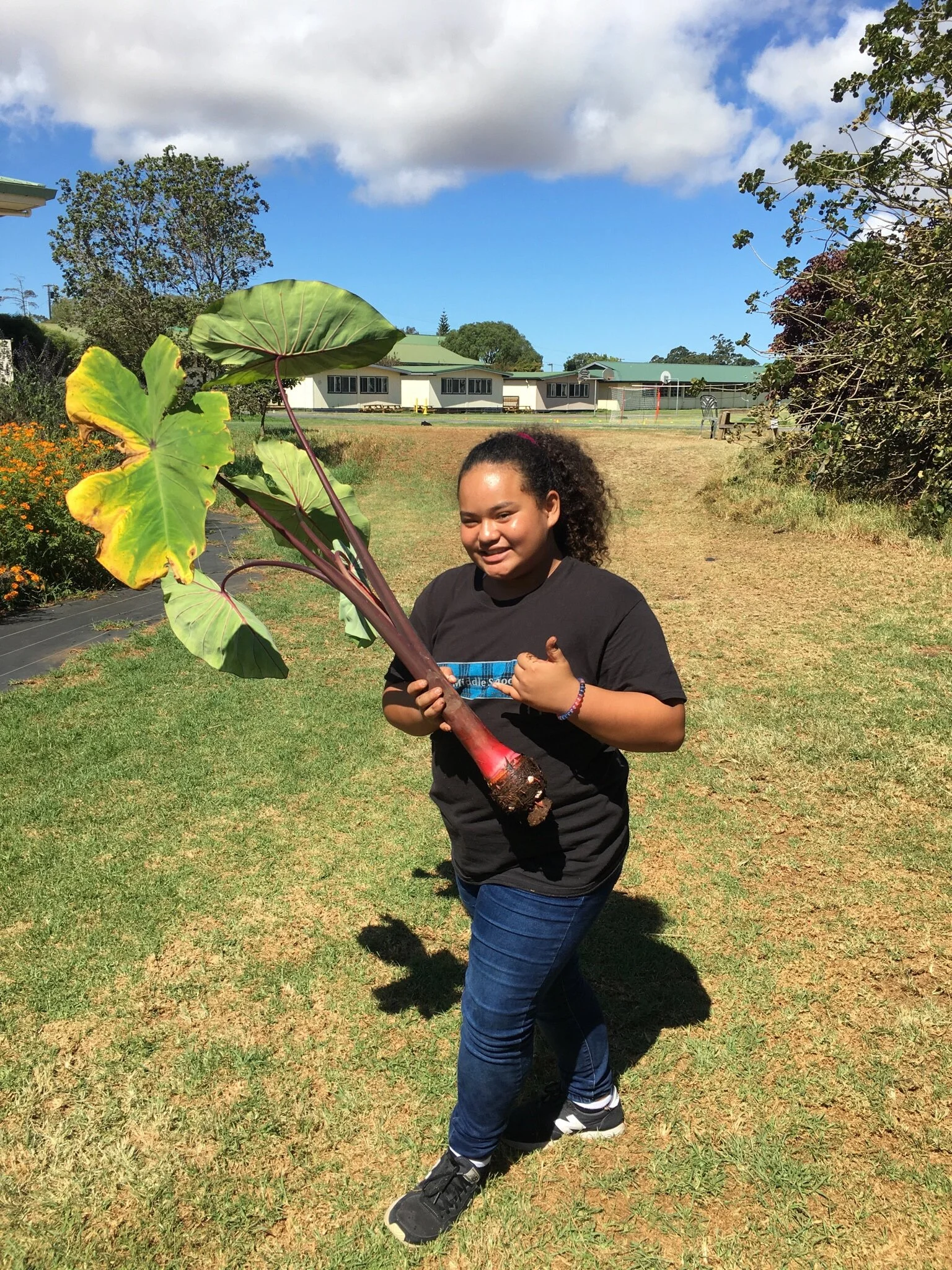
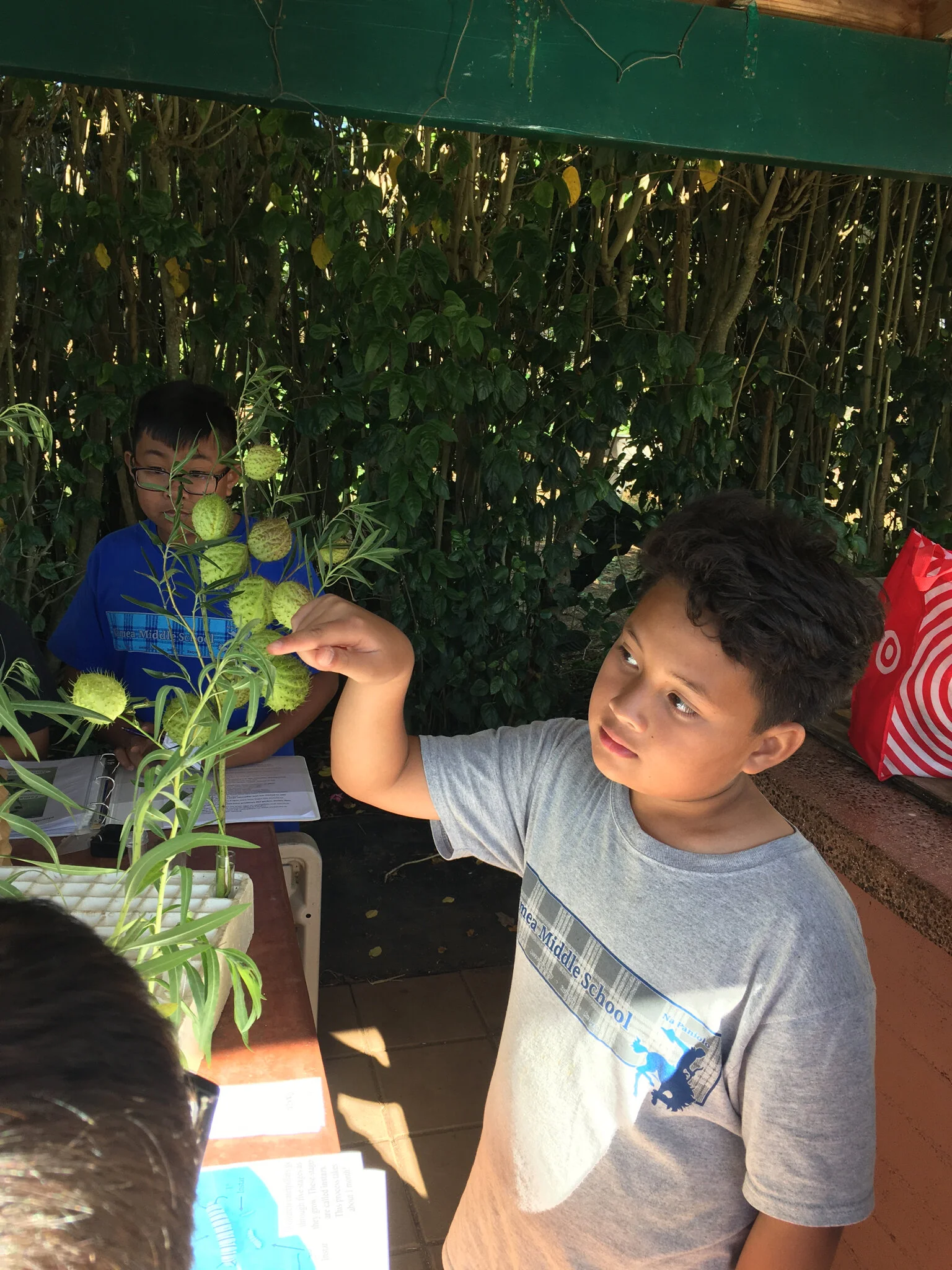
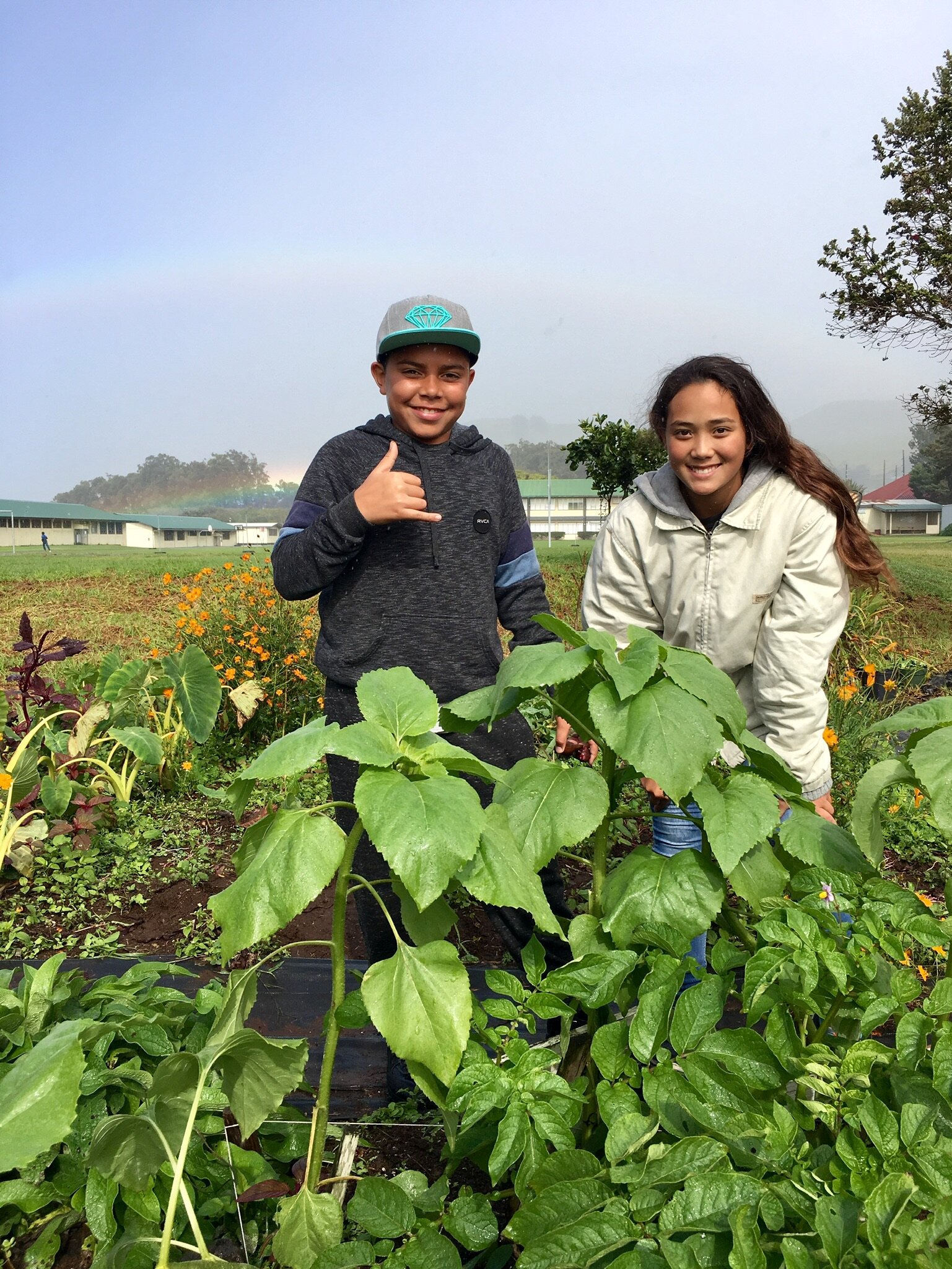
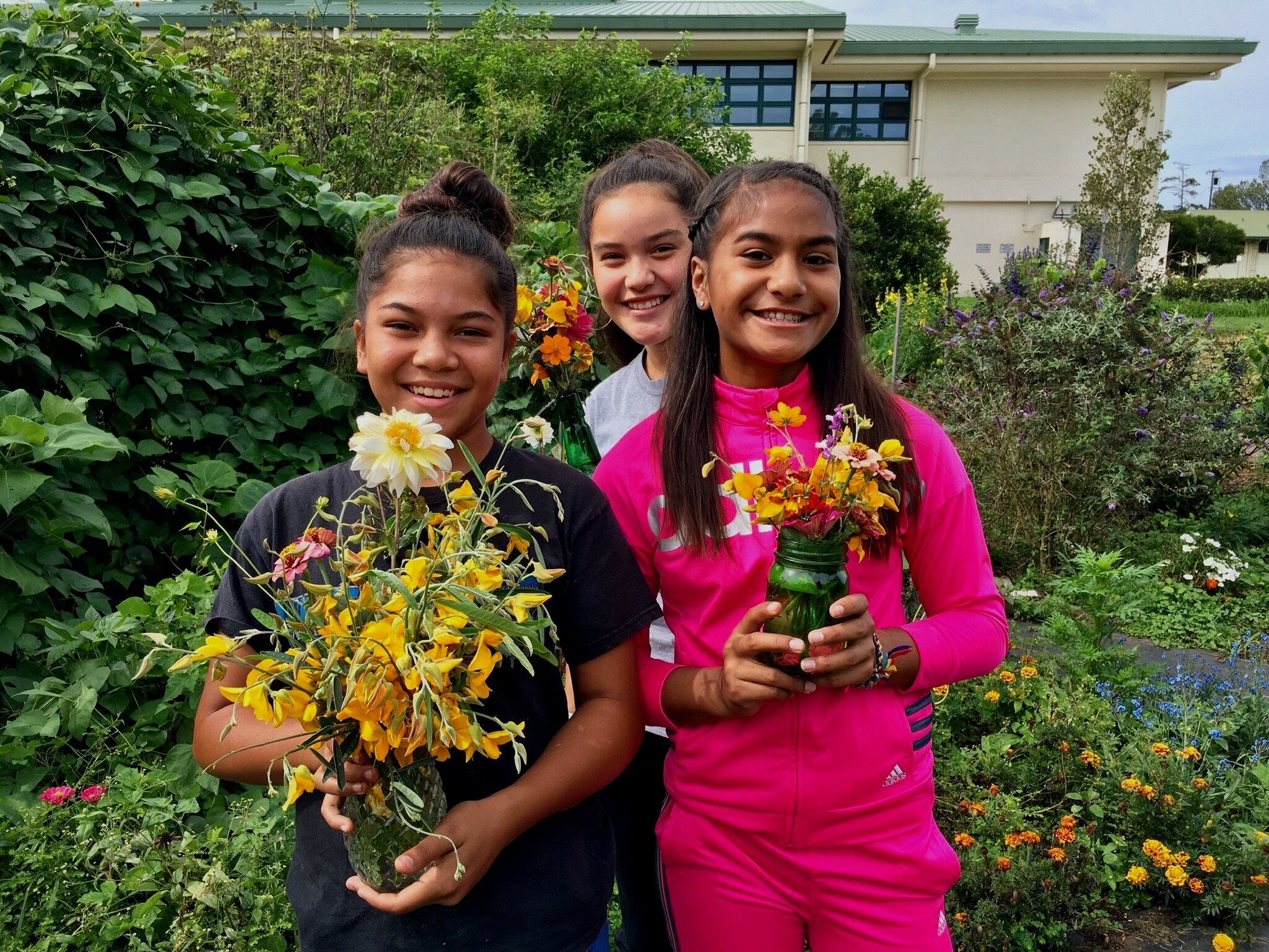
Our beautiful ¾ acre organic food garden was envisioned by community members to nurture health, wellness and connectedness to the earth. Supported by grants and contributions from many under the fiscal sponsorship and mentorship of Slow Food Hawai’i, the garden provides a cultural, hands-on, place-based learning experience that teaches students how to act as stewards of the land, to collaborate with others, and to enjoy first-hand the outcomes of their work.
Mala‘ai, The Culinary Gardens of Waimea School, is a non-profit food based educational program modeled after the successful Edible Schoolyard in Berkeley, California. Our students collaborate to grow high-quality organic produce to prepare and enjoy together. Our mission is to transform Waimea Middle School students’ relationship with food by creating and sustaining an organic garden and kitchen classroom that engages them in all aspects of growing, harvesting, preparing and sharing nourishing, healthy food. Ultimately, we intend for all food served at the school to be wholesome, fresh, delicious, and just.
Mala‘ai’s Core Values: Generosity of Spirit, Integrity, Sustainability, Harmony, Connectedness, Appreciation, and Respect
Mala‘ai (which translates as “food garden”) while awaiting the determination letter from the IRS for 501c3 status, operating under the fiscal sponsorship of The Kohala Center, works in collaboration with Waimea Middle School (WMS), Hawai’i’s first Public Conversion Charter School (PCCS) under Act 2/2002.
Regardless of social class, economic status, language, or individual time constraints, food is an inevitable constant in human life. How we relate to it on every level—how it is grown, harvested, and prepared, and with what spirit it is shared—reflects the well being of our lives. The consequences of the observed disconnection between human life and food production are far-reaching. Children’s diets are full of processed, “fast” food high in unhealthy fats, refined sugar and chemicals; diabetes and obesity are becoming commonplace. Also, perhaps the first generation not required to participate in family meals, children lose a critical opportunity to learn basic social skills such as respect for others, compassion and the ability to share. They may not regularly have the opportunity to experience the pleasure of cooking and eating with others. The broad investment by both the school and the larger community indicate not only the urgency and readiness to address the need of the children to learn about their relationship with the environment and their food, but also that a food-based educational program is a sound, creative approach to this need.
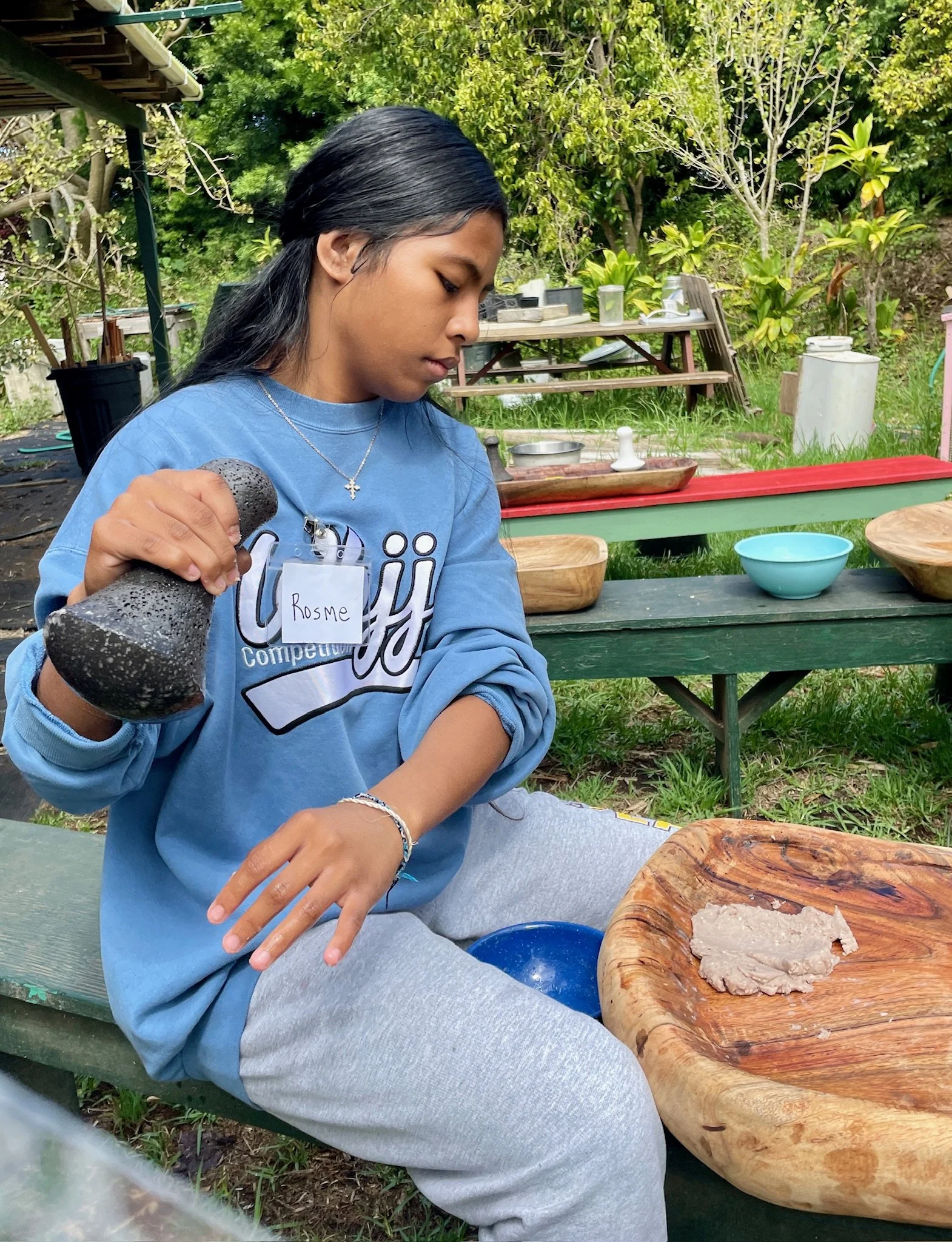
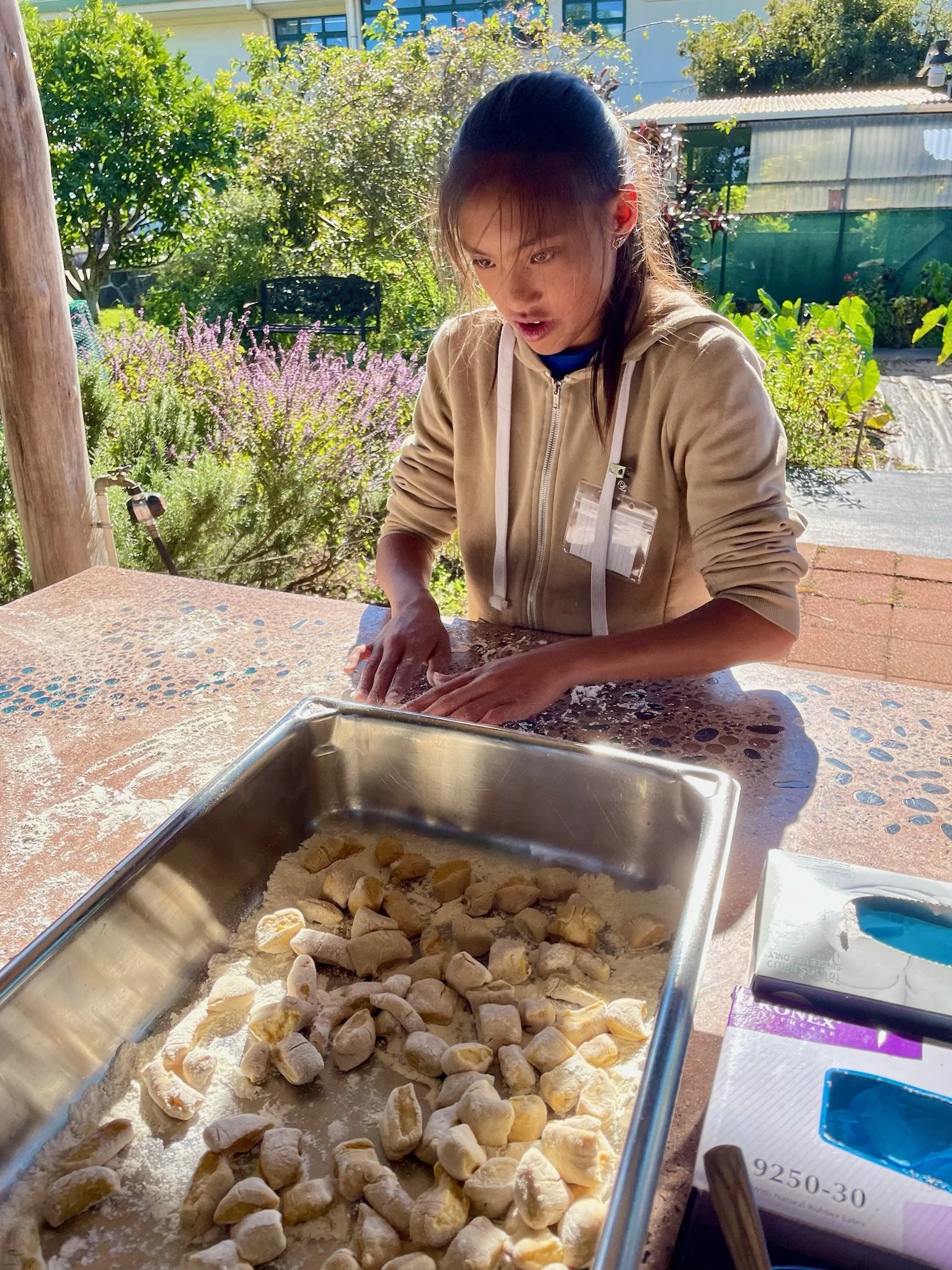
Utilizing a cooperative, hands-on approach, Mala’ai teaches students how to act as stewards of the land, to collaborate with others, and to enjoy firsthand the outcomes of their work. In addition to the program’s academic components, communal sharing of both labor and its fruits teaches many lessons; among these are compassion, respect for others and for the environment, and self-reliance.
Dr. Michelle Suber, a physician serving the Waimea community since 1998, created Mala’ai to address the disconnection between children living in today’s fast-paced, consumer-oriented society and their awareness of food origins and production. Mala’ai is distinguished nationally by fiscal sponsor Slow Food USA as having demonstrated exceptional support from the community and school.
Mala’ai’s advisory board is comprised of 7 diverse members of the North Hawaii community who have come together specifically for this program. Board members include:
Matilda Tompson is our Executive Director.